Bitcoin Halving Explained: What It Is and Why It Matters
Every 210,000 blocks, the new bitcoin paid to miners is cut in half. How the halving works, the dates so far, what it means for supply and miners.

A safety checklist for buying bitcoin: how to check a platform is regulated, secure your account, understand fees, avoid common scams and store what you buy.
Buying bitcoin is easy; buying it safely takes a few extra minutes. This checklist won’t tell you whether to buy, how much or when. That’s your decision, and bitcoin’s price can fall sharply. It will help you avoid the mistakes that cost people their money before price even comes into it.
Check that the exchange or app is registered or licensed where you live:
Read our guide to whether crypto is legal in the UAE, UK and US for more on each country’s rules.
Type the address yourself or use a bookmark. Download apps only from official app stores, and check the developer name. Search ads and fake apps imitating well-known exchanges are common.
| Fee | What it is |
|---|---|
| Trading fee | A percentage of each purchase |
| Spread | The gap between the buy and sell price, often hidden in “simple” buy buttons |
| Card fee | Extra charge for paying by debit or credit card |
| Withdrawal fee | Charged when you move bitcoin off the platform |
Compare the total cost, not the headline fee.
Make a small first purchase to learn how everything works. Keep records of every purchase, sale and transfer, including dates, amounts and prices; you’ll need them for crypto taxes.
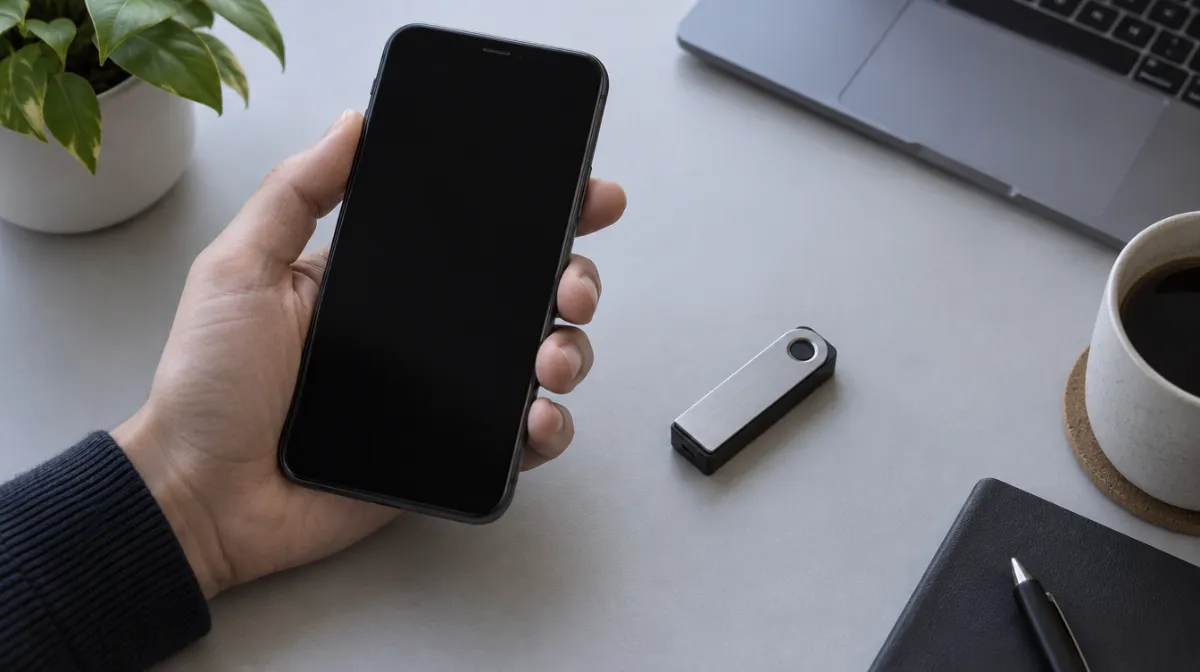
Leaving bitcoin on an exchange is convenient but means trusting the exchange. Moving it to your own wallet gives you control, and responsibility. If you do, send a small test transaction first, and store your seed phrase offline. Our guide to hot vs cold wallets compares the options.
Through a regulated platform in your country, on an account protected with strong two-factor authentication, buying only what you can afford to lose.
No. Bitcoin is divisible into 100 million units called satoshis, so you can buy a small fraction.
Some are run legitimately, but fees are often high and ATMs are heavily used in scams. Never use one because someone told you to.
Every article is edited by a human and checked against our editorial policy. Spotted a mistake? Tell us.
Every 210,000 blocks, the new bitcoin paid to miners is cut in half. How the halving works, the dates so far, what it means for supply and miners.
The 12 red flags behind most crypto scams, from guaranteed returns and romance scams to fake exchanges and recovery fraud, and what to do if targeted.
Hot wallets are convenient; cold wallets are safer. How each works, the real risks, costs and a simple rule for splitting your crypto between them.