How to Buy Bitcoin Safely: A Checklist
A safety checklist for buying bitcoin: how to check a platform is regulated, secure your account, understand fees, avoid common scams and store what you buy.

Every 210,000 blocks, the new bitcoin paid to miners is cut in half. How the halving works, the dates so far, what it means for supply and miners.
Every few years, Bitcoin goes through an event that makes headlines around the world: the halving. It isn’t a decision by a company or a vote by investors. It is written into Bitcoin’s code, and it happens automatically.
New bitcoins are created as a reward for miners, the computers that bundle transactions into blocks and secure the network. Every time a miner adds a valid block, it receives a block subsidy of newly created bitcoin, plus the fees from the transactions it included.
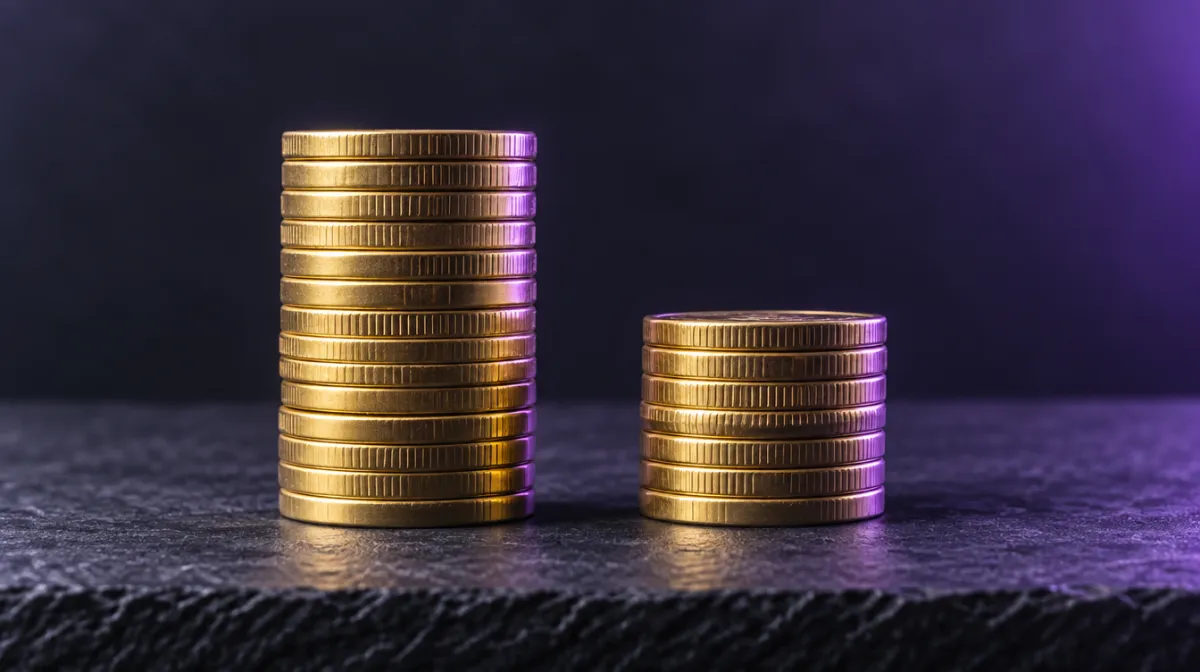
The halving cuts that subsidy in half. It happens every 210,000 blocks. Because a new block is added roughly every ten minutes, that works out at about once every four years.
| Halving | Year | Block reward after |
|---|---|---|
| Launch | 2009 | 50 BTC |
| First | 2012 | 25 BTC |
| Second | 2016 | 12.5 BTC |
| Third | 2020 | 6.25 BTC |
| Fourth | April 2024 | 3.125 BTC |
| Fifth (expected) | Around 2028 | 1.5625 BTC |
The exact date of each halving depends on how quickly blocks are found, which is why it can only be estimated in advance.
Bitcoin was designed with a fixed maximum supply of 21 million coins. Halvings are how that limit is enforced. By cutting the rate of new supply in half every four years, the total number of bitcoins approaches 21 million but never exceeds it. The last fractions of a bitcoin are expected to be mined around the year 2140.
The result is a predictable, declining rate of new supply, very different from traditional currencies, where central banks can change how much money is created.
For miners, a halving is an overnight pay cut: the same work earns half as many new coins. Miners with expensive electricity or older machines can become unprofitable and switch off. Over time, the network adjusts: the difficulty adjustment, which happens every 2,016 blocks, makes mining easier or harder so that blocks keep arriving about every ten minutes.
As the subsidy shrinks, transaction fees are expected to become a larger share of miners’ income. Whether fees alone can one day secure the network is a long-running debate in the Bitcoin community.
This is where hype takes over. In the past, large price increases have followed some halvings, and it is common to hear that halvings “cause” bull markets. Be careful with that story:
It is expected around 2028, after block 1,050,000. The exact date depends on how fast blocks are mined.
Just under 20 million had been mined by the mid-2020s, out of a maximum 21 million. Some of those are permanently lost because their owners lost their keys, one reason to back up your seed phrase carefully.
Only coins with similar rules, such as Litecoin, have halvings of their own. Most cryptocurrencies use different supply rules; Ethereum, for example, has no fixed cap or halving schedule.
Every article is edited by a human and checked against our editorial policy. Spotted a mistake? Tell us.
A safety checklist for buying bitcoin: how to check a platform is regulated, secure your account, understand fees, avoid common scams and store what you buy.
The 12 red flags behind most crypto scams, from guaranteed returns and romance scams to fake exchanges and recovery fraud, and what to do if targeted.
Hot wallets are convenient; cold wallets are safer. How each works, the real risks, costs and a simple rule for splitting your crypto between them.