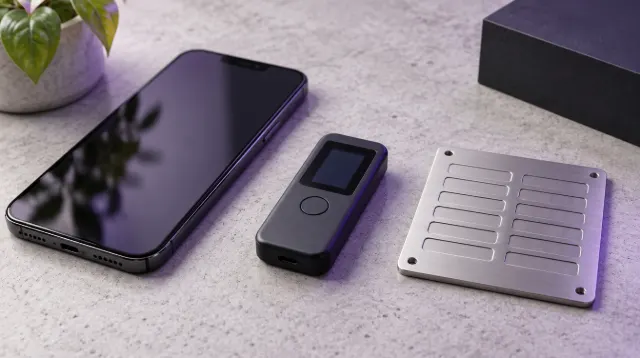
Hot Wallet vs Cold Wallet: Which Do You Need?
Hot wallets are convenient; cold wallets are safer. How each works, the real risks, costs and a simple rule for splitting your crypto between them.

The difference between keeping crypto on an exchange and in your own wallet: who holds the keys, what happens if things go wrong, and when to use each.
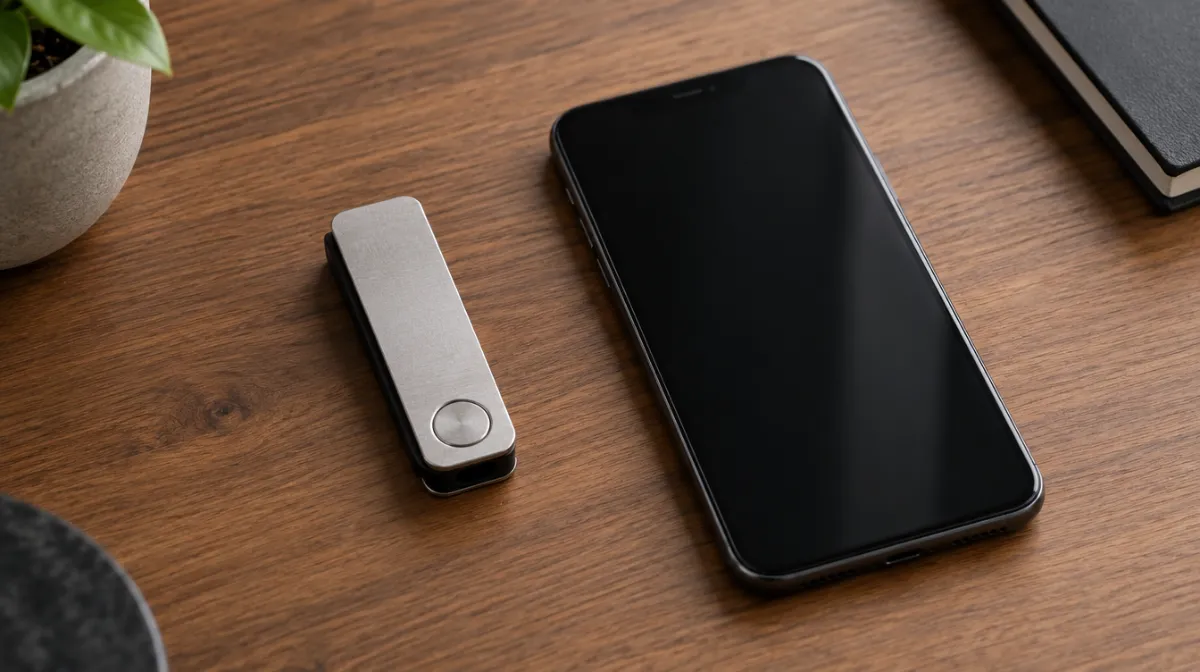
When you buy crypto, you have to decide where it lives: on the exchange where you bought it, or in a wallet you control. It sounds technical, but the question is simple: who holds the keys?
Crypto isn’t stored inside a wallet like cash in a purse. It sits on a blockchain, and whoever controls the private keys can move it. An exchange account is like a bank balance: the company holds the keys and owes you the coins. A self-custody wallet means you hold the keys, usually backed up with a seed phrase.
| Exchange (custodial) | Self-custody wallet | |
|---|---|---|
| Who holds the keys | The exchange | You |
| Forgotten password | Account recovery | Seed phrase or nothing |
| Company collapses | Funds may be frozen or lost | Unaffected |
| You get hacked or scammed | Some platforms may help | Usually irreversible |
| Best for | Buying, selling, small balances | Long-term holding, control |
Exchanges have failed before. When large platforms have collapsed, customers were suddenly unable to withdraw, and some waited years for partial repayment. Others have lost customer funds to hacks. Even healthy exchanges can pause withdrawals during market chaos or freeze accounts during compliance checks.
That’s the meaning of the crypto saying “not your keys, not your coins.” If you leave crypto on an exchange, you’re trusting its security, its honesty and its solvency. Choosing a well-regulated platform reduces the risk; our checklist for buying bitcoin safely explains how to check.
Holding your own keys removes company risk but hands you every job a bank would do. There’s no helpline and no password reset. If you lose your seed phrase, sign a malicious transaction or send coins to the wrong address, the money is usually gone.
Our guide to hot vs cold wallets compares them in detail.
Many people use both: an exchange for buying and selling, and a wallet for holding. A common approach is to keep only what you’re actively trading on the exchange and move the rest to a hardware wallet. Whatever you choose, enable strong two-factor authentication on exchange accounts and practise with small transfers first.
Usually not in the way bank deposits are. Some exchanges hold insurance against specific events like hacks, but it rarely covers everything, and crypto isn’t protected by schemes such as FDIC or the FSCS.
Yes. Exchanges can freeze accounts for security, legal or compliance reasons, and during outages. That’s one reason people move long-term holdings to their own wallets.
A regulated exchange is simpler to start with. Move to self-custody once you understand backups and security, starting with a small amount.

Every article is edited by a human and checked against our editorial policy. Spotted a mistake? Tell us.
Hot wallets are convenient; cold wallets are safer. How each works, the real risks, costs and a simple rule for splitting your crypto between them.
What stablecoins are, how fiat-backed, crypto-backed and algorithmic stablecoins try to hold their value, what they’re used for and the risks to understand.
Ethereum explained in plain English: what makes it different from Bitcoin, how smart contracts and gas fees work, the switch to proof of stake and key risks.